Five Years at Microsoft
A crystal landed on my desk yesterday. Engraved with my name and “June 2026,” it marks five years at Microsoft. It is a small object, but it made me stop in a way that most workdays do not. Five years is a long time to spend anywhere, and it is worth asking what it actually adds up to.
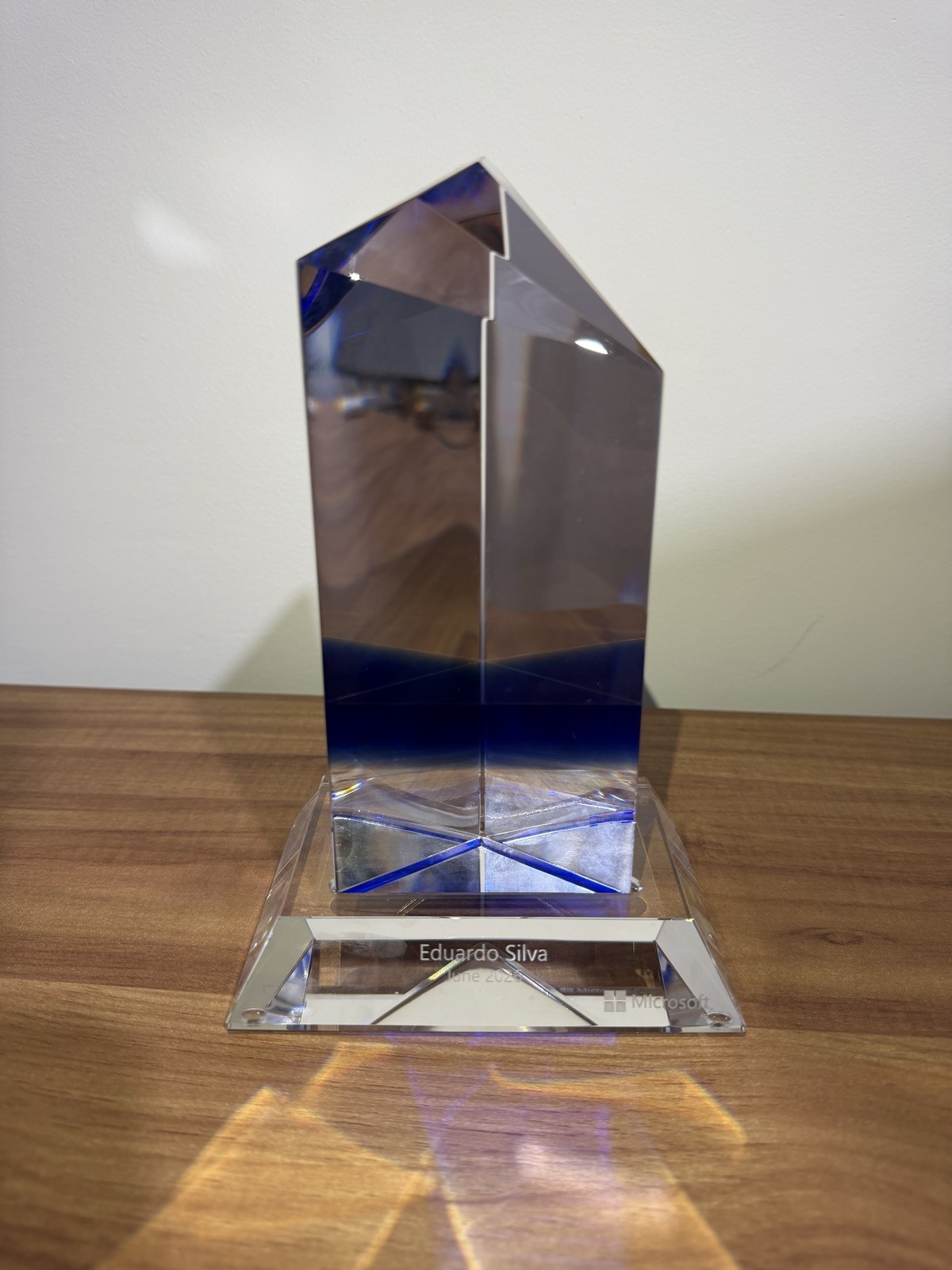
Microsoft hands these out at every five-year milestone, and the crystals grow with each one. It is a nice tradition. But the object is not really the point. What the crystal represents is time, and time is the one resource in a career you cannot get back. Five years is enough to go deep on hard problems, to see projects born and shipped and sometimes quietly retired, and to work alongside some genuinely brilliant people.
What five years actually taught me
When I joined, I came from a small AI startup in Brazil. Microsoft was a different universe: systems at a scale I had never touched, engineering rigor I had to grow into, and a bar that pushed me constantly. The lessons that stuck were not the ones I expected. I learned how decisions compound across massive infrastructure, how much reliability really costs, and how the distance between your code and the end user shapes the way you think.
I also learned that the company you join is not the company you stay in. Teams change, areas change, and you change with them. I recently moved into semantic search and content understanding, which feels like starting fresh while carrying everything the previous years taught me. That is the part the crystal does not capture: five years is not one experience, it is several, stacked on top of each other.
Onward
I am proud of these five years, and I am not done. The crystal goes on the shelf, and the work continues. If anything, this milestone is a reminder to keep choosing growth over comfort — because the next five years are the ones that matter now.
This article was written by me and reflects my own personal and professional experience. AI models were used to assist with revision and editing.